

Every delivery team has a backdoor. It might be called a hotfix lane, an emergency change, a "P1 override," or just "Slack the lead and ship it." Whatever you call it, it exists because the normal change process is too slow for a payment outage at 2am, a broken checkout on Black Friday, or a security patch that can't wait for Thursday's CAB.
The problem isn't that the backdoor exists. The problem is what happens after the fire is out.
The pattern almost everyone falls into: the expedited change ships, the incident closes, everyone exhales — and the shortcut quietly becomes permanent. The hardcoded config value that was supposed to be temporary is still there eight months later. The skipped acceptance criterion never got backfilled. The feature flag that was flipped "just for the weekend" is now load-bearing. Nobody remembers it was a shortcut because nothing in the system remembers it was a shortcut.
This post is about one specific fix: a token-based model for expedited change requirements that bakes cleanup and reversion into the emergency itself, so speed today doesn't become debt forever.
The real failure isn't the shortcut — it's the missing expiry
When teams talk about tightening expedited change requirements, they usually reach for more approval. Add a sign-off. Require a VP's name. Make the engineer write a paragraph. That instinct is wrong, and it backfires in a pretty predictable way.
What usually happens when governance is front-loaded: you pile friction onto the moment of the emergency — exactly when people have the least patience for it — and put nothing on the back end, where there's no urgency and no one watching. So people route around the front-loaded approval ("I'll fill out the form after"), and the back end never happens because nothing forces it to.
The insight most governance models miss: an expedited change is not a decision, it's a loan. You're borrowing speed against future quality. And like any loan, the problem is never the borrowing — it's the absence of a repayment date. A hotfix without a cleanup deadline is a balloon payment nobody scheduled.
So the design goal flips. Instead of making the emergency harder to start, you make it impossible to silently finish. The change can go out in ten minutes. What it cannot do is disappear from the ledger.
The emergency token: a lightweight contract, not a form
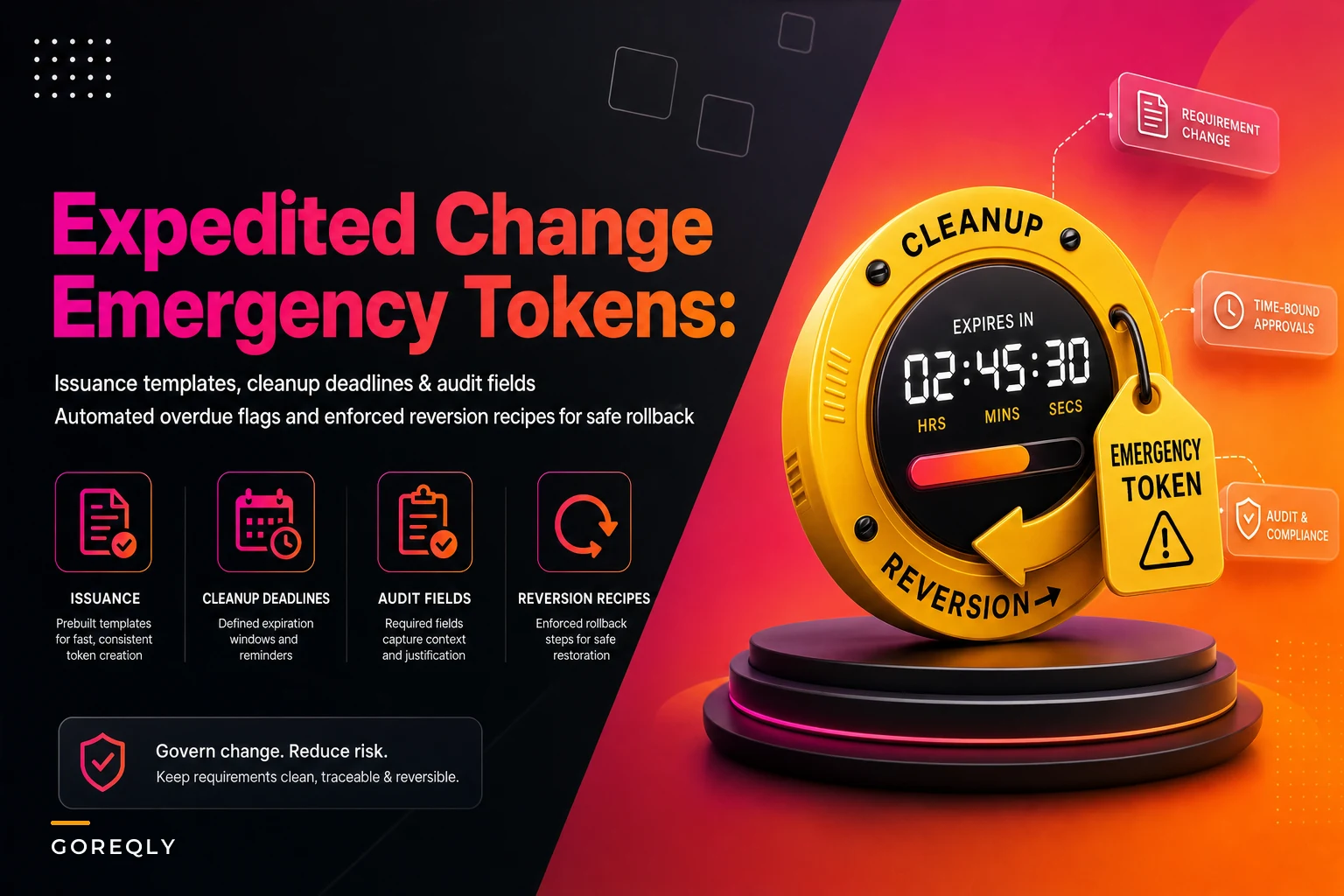
The core idea is simple. Every expedited change gets issued a token — a small, structured record that travels with the change and carries three things the normal process would have guaranteed but the emergency skipped:
Stop losing track of critical project requirements.
GoReqly helps you capture, organize, and track every requirement with precision and clarity.
- Centralized requirements repository
- Collaborative editing & commenting
- Traceability & version control
No credit card required
-
What corners were cut (the deferred requirements, skipped tests, or temporary config)
-
A cleanup deadline (when the proper work must be done)
-
A reversion recipe (the exact steps to undo this change if cleanup doesn't happen or the fix goes sideways)
Think of the token as a promissory note attached to the commit. It's not a 40-field change request. It's closer to a structured sticky note that the system refuses to forget.
Here's what this looks like in practice. A fintech team pushes an emergency fix at 1:40am because a third-party KYC provider changed a response shape and new signups are failing. The proper fix involves updating the integration contract and adding two acceptance tests. At 1:40am, they don't do that — they add a defensive null-check that swallows the bad response and lets signups through.
Their token looks roughly like this:
| Field | Value |
|---|---|
| Token ID | EXP-2291 |
| Trigger | KYC provider response schema change, signup failures |
| Corners cut | Added defensive parse; skipped contract update + 2 acceptance tests |
| Temporary artifacts | kycfallbackmode = true flag |
| Cleanup deadline | 5 business days |
| Reversion recipe | Revert commit a3f9c, set kycfallbackmode = false, redeploy |
| Owner | Platform team, on-call lead |
Notice what this does. The shortcut is now named. The flag has an expected death date. And if the proper fix stalls, whoever picks this up at standup three days later knows exactly what temporary thing is holding production together — and exactly how to pull it out.
The three rules that make tokens actually work
A token on its own is just documentation, and documentation rots. What makes this model hold up is three enforcement rules wrapped around it. Each one targets a specific way expedited changes normally go bad.
Rule 1: Mandatory cleanup windows
Every token type carries a maximum cleanup window based on severity, not vibes. The window isn't negotiable at issuance time — it's a property of the kind of shortcut you took.
A typical breakdown:
-
Config/flag flip, no code change → 3 business days
-
Defensive patch with deferred tests → 5 business days
-
Skipped acceptance criteria on a shipped feature → 7 business days
-
Security patch with incomplete regression coverage → 48 hours (this one gets shorter, not longer)
That last point is worth stealing. Most teams do the opposite — big scary changes get long leashes because everyone's afraid to touch them again. That's exactly backwards, and it's how a "temporary" fallback flag survives into its second fiscal year.
Rule 2: Automation that flags overdue items
This is what separates a real process from a wishlist. A cleanup deadline nobody checks is just a comment in a ticket.
The automation does one job: it watches every open token against its window and escalates when things slip.
-
Day of deadline
owner gets a direct nudge
-
Deadline + 1
the token's team lead gets looped in
-
Deadline + 3
it surfaces on a visible "overdue expedited changes" board that leadership actually looks at
-
Deadline + 5
the reversion recipe gets proposed automatically — meaning the default outcome is undo the shortcut, not keep ignoring it
That last step matters most. If the path of least resistance is "do nothing and the flag stays," the flag stays. If the path of least resistance is "do nothing and the system reverts your temporary hack," suddenly people find time to do the proper cleanup.
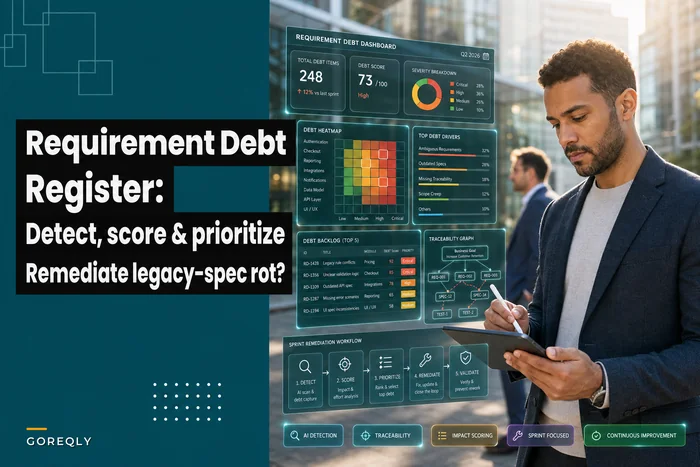
Teams that already run a requirement debt register have a natural home for overdue tokens — each expired cleanup window becomes a scored debt item instead of an invisible risk sitting in production.
Automate the initial nudge as a direct message so owners see the deadline without hunting for a dashboard.
A quick visual of the token lifecycle.
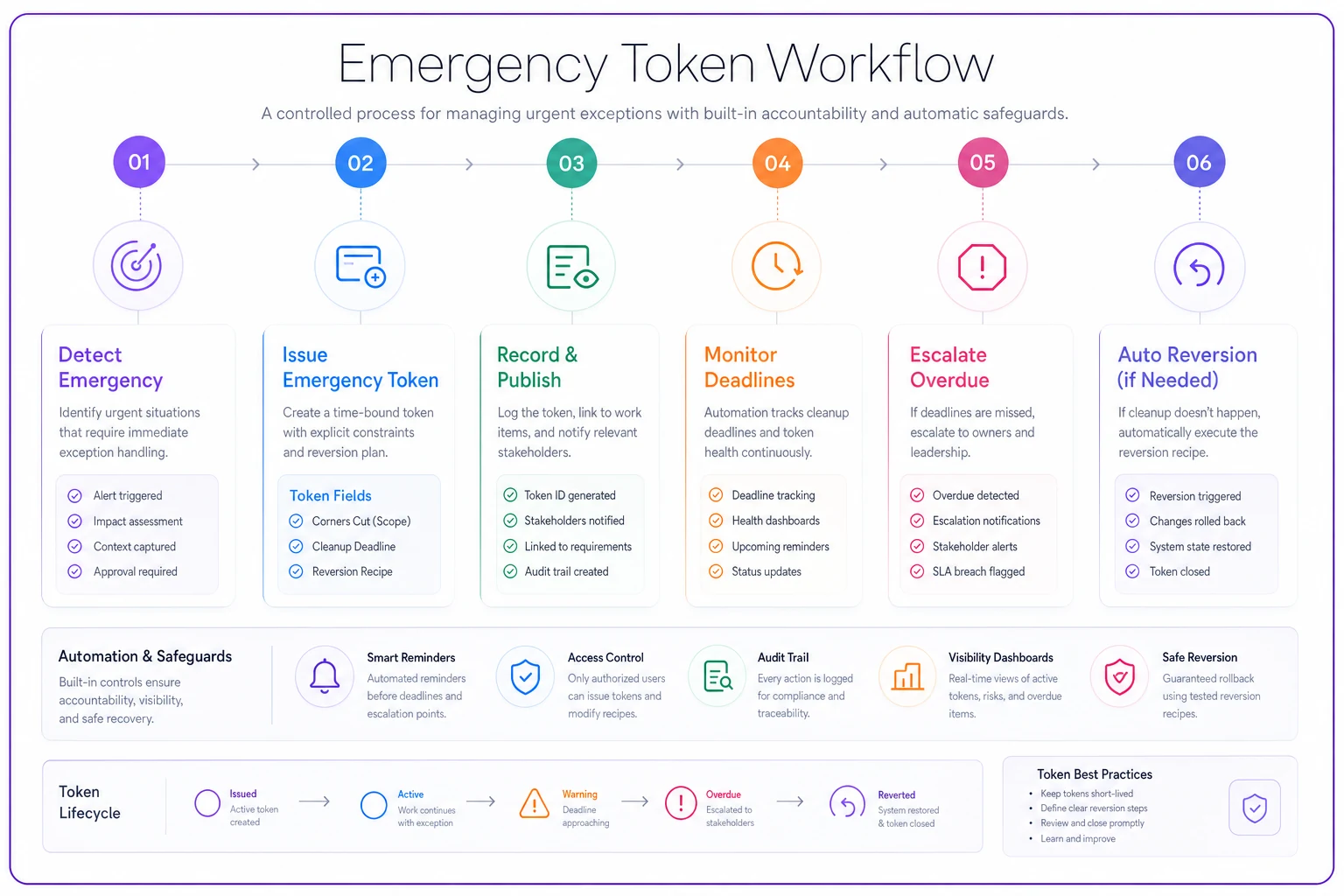
This diagram shows how tokens are issued, monitored, escalated, and optionally reverted to keep temporary fixes from becoming permanent.
Rule 3: Enforced reversion recipes
A reversion recipe is the undo button written before you need it, while the person with full context is still awake.
This matters because of a brutal asymmetry. At 1:40am, the engineer knows precisely what they changed and how to undo it. Six days later, when the fix is causing weird data drift and the original engineer is on PTO, nobody does. The reversion recipe captures that knowledge at peak clarity and parks it where the next person can find it.
The rule: no token issues without a reversion recipe. You cannot take the shortcut unless you've written down how to take it back. This single constraint kills the worst category of expedited change — the one-way door you can't walk back through. If someone can't describe how to revert it, that's a signal it shouldn't go through the emergency lane at all. It needs real review.
Who should NOT use this model
Skip it if your emergency volume is tiny. A five-person team that does one hotfix a quarter doesn't need a token ledger. They need a shared doc and a calendar reminder. Adding ceremony to something that happens four times a year just creates a process nobody remembers how to use when it finally matters.
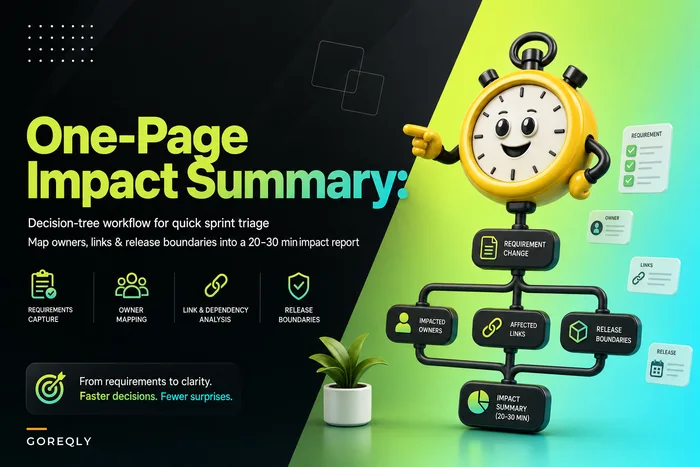
Don't use this for normal fast-tracking. Expedited change tokens are for genuine emergencies — production down, security exposure, revenue bleeding. If you're issuing tokens for "the client really wants this by Friday," you've turned an emergency mechanism into a routine bypass and your cleanup windows will become noise. Routine prioritization belongs in your change-request impact triage, not your emergency lane.
It's a bad fit if nobody owns enforcement. The automation is doing the emotional labor here — it's the thing willing to nag people and escalate to leadership without feeling awkward about it. If there's no system watching the windows and no leadership willing to look at the overdue board, you've just built a prettier way to forget your shortcuts.
A real scenario: the e-commerce team drowning in temporary flags
A mid-size e-commerce operation — roughly 40 engineers across six squads — had a recurring problem. Their peak season generated a flurry of emergency changes, and they ran lean on process during those weeks on purpose. Smart. The trouble showed up in January.
A cleanup audit found around 30 feature flags and config overrides still live from fixes during the November–December rush. Nobody could confidently say which ones were still needed. Two of them turned out to be masking actual bugs that had never been properly fixed — the "temporary" patch had simply become the behavior. One flag was suppressing a pricing validation and had quietly let through a handful of mispriced orders.
They introduced the token model the following cycle. Nothing fancy — a structured record per expedited change, severity-based cleanup windows, and a weekly overdue report that went to engineering leads.
The next peak season produced a comparable number of emergency changes, somewhere in the 20s. But the January audit the following year found four lingering temporary artifacts instead of thirty, and all four were documented, deliberate decisions with owners attached — not mysteries. The cleanup backlog went from a multi-week archaeology project to roughly a day of known, scheduled work.
The interesting part wasn't the automation. It was behavioral. Once engineers knew every shortcut would resurface with their name on it inside a week, they started writing better temporary fixes — ones that were genuinely easy to revert — because they knew future-them (or a teammate) would actually have to deal with it.
A quick checklist to stand this up
If you want to pilot this next quarter, here's the minimum viable version:
-
- [ ] Define 3–4 token types tied to severity, each with a fixed cleanup window
-
- [ ] Make a reversion recipe a required field — no recipe, no token
-
- [ ] Capture the specific corners cut (deferred tests, temp flags, skipped criteria), not a vague summary
-
- [ ] Set up overdue detection that escalates on a schedule, not just a one-time reminder
-
- [ ] Make reversion the default outcome when a window blows past
-
- [ ] Put overdue tokens somewhere leadership genuinely sees them weekly
-
- [ ] Review closed tokens monthly — look for patterns in why you keep needing the emergency lane
That last point tends to pay off more than people expect. When you look back at a quarter of tokens, the same root cause shows up again and again — a flaky vendor integration, a fragile deploy step, a test suite too slow to run under pressure. The token ledger stops being just a cleanup tool and starts telling you where your delivery process is actually weak.
The mindset shift that makes it stick
Teams that get this right stop thinking of expedited changes as exceptions to the process and start treating them as a managed instrument — something you're allowed to use freely, precisely because it has built-in repayment terms.
Speed and remediation stop being in tension once the remediation is scheduled at the moment of the shortcut. You're not choosing between shipping fast and keeping quality. You're shipping fast and writing down the IOU, with a due date the system won't let everyone forget.
The shortcut was never the problem. The silence afterward was. Give every emergency change an expiry, a reversion path, and something watching the clock — and the mess that normally accumulates over a peak season quietly stops showing up in your January audit.
Ready to transform your product delivery?
Join 2,000+ teams using GoReqly to improve requirements accuracy, reduce rework, and accelerate time to market.